

Shelby Wu October 23, 2026
Two forces are pulling in opposite directions in the housing market right now. Mortgage rates have pushed back above 7 percent, which squeezes affordability. At the same time, inventory has built up well beyond where it started the year, which gives buyers options and negotiating room they have not had in a while. For anyone buying or selling in Irvine or elsewhere in Orange County this fall, the smart move is understanding how those two forces interact instead of reacting to either one alone.
Freddie Mac's weekly survey put the average 30-year fixed rate at 7.28 percent in the first week of October, up from 7.03 percent the week before and 6.34 percent a year earlier. That 7.03 percent reading was the first time the survey topped 7 percent since January 2025. Daily lender quotes in mid-October have run even higher, near 7.5 percent, and the Federal Reserve raised its target rate by a quarter point in September, citing persistent inflation. Rates change weekly and vary by lender and borrower profile, so confirm the current number before making any decision.
The reason this matters so much here is simple math. On a $2 million Irvine home with 20 percent down, the gap between a 6.34 percent rate and a 7.28 percent rate adds roughly $1,000 a month to principal and interest, before property taxes, insurance, HOA dues, or Mello-Roos. On an $800,000 loan, the difference between 6.5 percent and 7.5 percent is about $537 a month, or roughly $6,400 a year. Those are illustrations, not quotes, but they show why one percentage point can change what a buyer is comfortable offering.
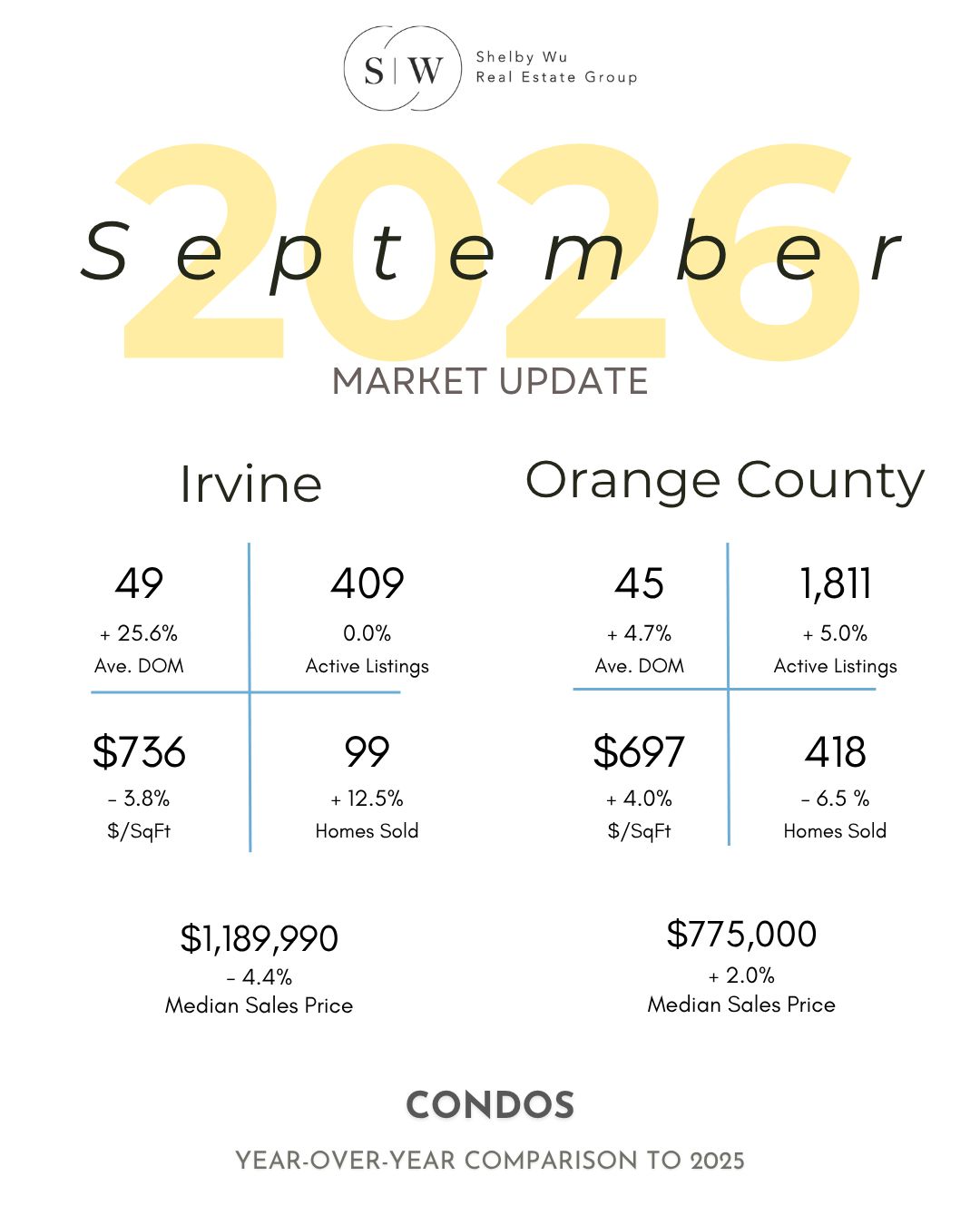
Here is how September 2026 compares with September 2025, broken out by home type.
Single family prices are still moving up year over year, with the Irvine median up 7.6 percent and the Orange County median up 4.7 percent, even as homes sell more slowly and fewer change hands. Irvine single family homes averaged 51 days on market, about 31 percent longer than a year ago, and sales slipped 11.4 percent.
Condos are the softer segment in Irvine. The median price fell 4.4 percent and price per square foot fell 3.8 percent, though condo sales rose 12.5 percent, a pattern consistent with buyers gravitating toward lower price points. Countywide, condo inventory is up 5.0 percent while single family inventory is down 8.0 percent, so condo buyers generally have more choices to work with.
In plain language, prices have held up, but the pace has changed. Fewer buyers are writing offers, homes are sitting longer in Irvine, and higher rates are making buyers more selective.
Looking at countywide MLS data through mid-October, the slowdown is showing up most clearly in buyer activity.
The takeaway is that this is a thinner market, not a broken one. Fewer buyers are writing offers, but well-priced homes are still selling for close to asking.
Orange County does not behave like the national market, largely because of price. Just over a third of local inventory sits under $1 million, and that is where buyers are most dependent on the monthly payment. That segment is showing the most strain, with homes taking longer to sell and a growing number of active listings.
The $1 million to $2 million range remains the fastest-moving part of the county. Homes at $2 million and above take longer to sell and tend to give more at the negotiating table. Buyers in the upper tiers are often driven by equity rather than monthly payment math, so a move in rates changes their plans less.
Housing analyst Steven Thomas of Reports On Housing has pointed to rising inventory as a silver lining in a sluggish market, one that could give buyers more negotiating power heading into 2027.
Locally, that shows up in the numbers above. With nearly twice as many active listings as in January and rates holding buyers back, sellers are meeting the market instead of waiting for a bidding war. Still, a flood of supply is not likely. Single family inventory is actually down from a year ago, 10.2 percent in Irvine and 8.0 percent in Orange County. Many Orange County owners hold mortgages in the 3 to 4 percent range and have little reason to trade into a rate near 7 percent. Countywide home sales have been drifting lower for about four years, with roughly 20,700 residential sales in 2025, well below the pandemic-era pace. The result is a market with fewer buyers and fewer sellers, where patient, prepared buyers hold more leverage than they have in years.
Beyond Irvine, recent MLS data shows how well-priced homes are moving in different parts of the county. These figures cover roughly the last six months and use median days on market, so they are not directly comparable to the September averages above.
The pattern is consistent across the county. Homes priced at or near where the market is clearing sell in a few weeks. Listings priced well above that range are the ones that sit, expire, or get canceled.
New construction is one of the more interesting corners of the market right now. There are about 640 active and coming soon new construction listings across Orange County, at a median list price of roughly $1.66 million, and Irvine accounts for about a third of them. Rancho Mission Viejo is the most accessible of the major new home areas, with a median near $1 million.
With rates high, builders are more willing to offer rate buydowns, closing cost credits, and upgrade packages to move homes, and some of those incentives can bring the monthly payment well below what a 7 percent rate suggests. Many builders also sell directly from their sales offices without listing publicly, so the real inventory is larger than any online search shows. The agent in the model home represents the builder, so bringing your own buyer's agent before you walk in is worth considering.
Reports On Housing has also been examining the biggest risks that could shape the housing market heading into 2027, and rates are clearly one of the variables worth watching. Locally, a few structural factors point in the same direction. Rate lock is likely to keep many owners from selling, which limits supply. At the same time, state housing requirements call for roughly 180,000 new homes in Orange County by 2029, which could add supply and gradual price pressure over time, especially in mid-tier and family-sized homes. The practical takeaway is to plan around a range of outcomes rather than betting on one forecast. A buyer who is pre-approved and clear on their numbers, and a seller who is priced realistically, are both well positioned however rates move next.
Higher mortgage rates make the monthly math harder, while rising inventory makes negotiating easier. In Irvine and across Orange County, buyers who focus on total monthly cost and use their leverage thoughtfully can still find good opportunities, and sellers who price accurately and stay flexible are still getting deals done. The right strategy depends on your neighborhood, price point, and timeline.
Wondering how current rates and inventory affect your plans in Irvine or Orange County? Reach out at [email protected] or 949.385.3596 for a snapshot specific to your neighborhood and budget.
Stay up to date on the latest real estate trends.
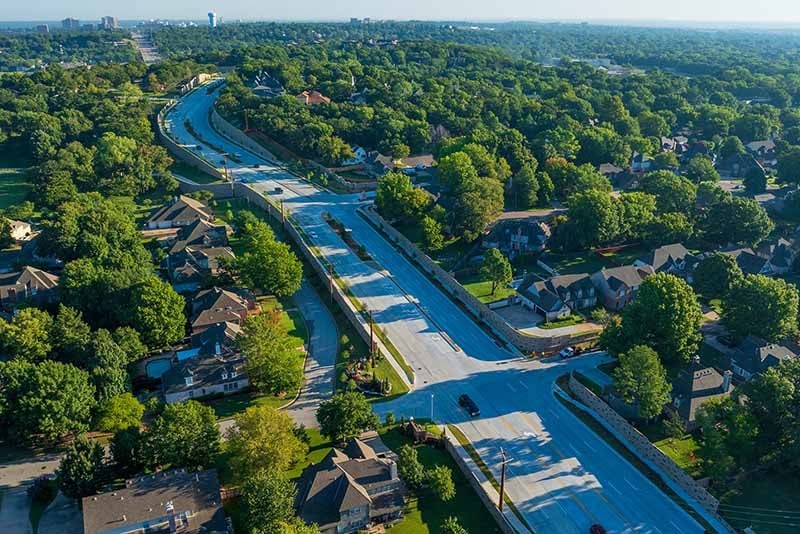
Irvine is studying protected bike lanes, parking changes, and safer crossings on Yale Avenue and Yale Loop. See the concepts, the concerns, and share your view.
Rates are above 7% and Irvine homes are taking longer to sell. See September 2026 Irvine and Orange County stats and what they mean for you.


Irvine Real Estate Market Update
See the latest Irvine real estate market data for June 2026 — median prices, days on market, and inventory trends for condos and single-family homes, compared to Orang… Read more

Etiam non quam lacus suspendisse faucibus interdum. Orci ac auctor augue mauris augue neque. Bibendum at varius vel pharetra. Viverra orci sagittis eu volutpat.